Simply put, in weight pull a dog must pull a cart 16 feet in under 60 seconds.
Dogs participate in a properly fitted weight pull harness with a spreader bar. Judges may inspect harnesses at any time.
Weight Pull competitions are structured in “rounds”. Rounds are defined by an increasing weight increment. (Example: round 1 is the empty cart, round 2 is the cart plus a predetermined increment of bricks.) The weight increment is called the “Drop”.
Round 1 will be the empty cart. Each dog will have the opportunity to PULL or PASS in each round. Dogs that successfully pull the entire distance in the allotted time will move on to the next round.
Handlers may PASS up to three rounds in a row after their dog has begun pulling. (Example: Dog completes Round 1 easily and quickly, handler may PASS Rounds 2, 3, & 4. Dog would pull again in Round 5.)
Rounds continue until the handler chooses to withdraw their dog by telling a judge or the dog either earns two fouls or is disqualified. Fouls are called by the judge at the time they are observed. Only judges can call a foul.
Fouls are assessed for:
- Not pulling the cart/sled the entire distance in allotted time. If the cart is rolling at the end of 60 seconds, the judge will continue to allow the dog to pull until the cart/sled either stops or the pull is successful.
- Handler touching the dog OR equipment after the timer has started. (Often called “double handling.”) This includes long hair, hoodie draw strings, etc!
- Dogs become tangled in equipment/harness in a way that interferes with the safety of the dog while pulling. (Judges will call this a “tangle”).
- Excessive foul language in the chute.
- Dropping or pushing the dog.
- A sling-shot or walking start.
- Baiting (in any form). This includes having a toy or leash on the handler that is visible to the dog.
- The handler being in the “No Pull Zone” for more than three seconds. This area is between the front of the cart and the base of the dog’s tail.
The following fouls are grounds for disqualification
- Food on the handler in the chute.
- Any elimination by the dog in the chute.
- Aggressive/harsh action directed to the dog. This includes physical corrections of all kinds. If a handler is DQ’d for aggressive/harsh actions toward a dog, all of their dogs entered are DQ’d for the event and a report will be submitted to W3PO.
The highest weight a dog pulls in the event is used to determine their class placement. There is also an overall award for the dog who pulls the highest weight regardless of class and the highest percentage weight (highest weight divided by body weight).
At the start of a round, the judge will list all the dogs in that round. Dogs do not have to come up in the order they are called. If a handler has multiple dogs in the same round, we ask that they try to get the first dog entered into the round quickly so they have time to grab the next dog. The judge will often state the dog’s name as they enter the chute to confirm they have the correct dog.

The dog’s harness will be hooked to the cart (by handler or cart help). Dogs must have four feet on the ground before they are hooked to the cart. Without releasing the dog, the handler will position the dog between the cart’s wheels or sled runners and walk the dog out to extend the trace line. There can be no slack in the trace line before releasing the dog. In a wheeled match, the cart can be brought to the starting line prior to hooking up your dog. In a snow match, the sled will be moved to the starting line AFTER your dog is hooked up. The judge will often direct this. When you think you are ready, look at the judge. THE JUDGE WILL TELL YOU WHEN YOU ARE GOOD!
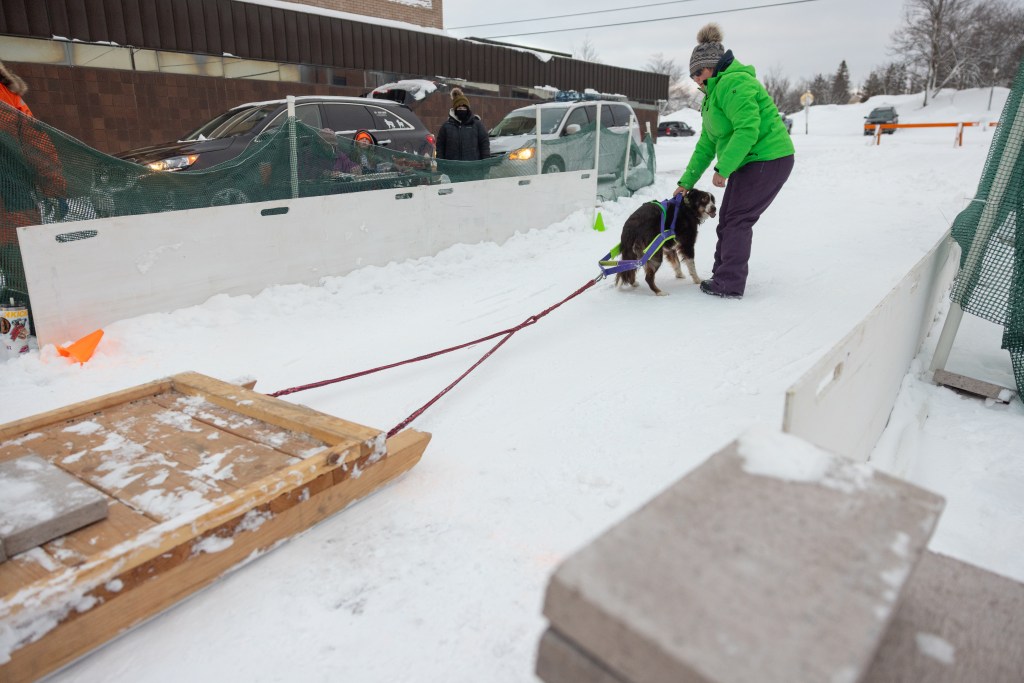
When ready, the handler will release the dog and encourage the dog to pull. Time begins when the handler gives the first cue (verbal or signal) or the dog initiates forward movement.
When the cart is pulled past the finish line, the Judge will call “PULL” and state the dog’s time. After the Judge calls “PULL” the handler can touch their dog. The dog will be unhooked from the cart and exit the chute. At this time, we encourage handlers to state if they plan to pass any rounds.
The dog will rest (preferably crated) while the rest of the round is completed. Once away from the chute, the handler may offer any reward for a job well done.
If the dog earns a foul, the handler can elect to reset immediately or proceed to the end of that round’s run order. We encourage handlers to assist their dogs in finishing the round even if it wasn’t successful to build confidence in the dog in what is expected of them.
 Twin Cities Dog Powered Sports Club